🍁 100% CANADIAN OWNED AND OPERATED

Visit us in REGINA and SASKATOON

STORE HOURS: Mon-Fri 8-4:30

Composite decking pros and cons — also written as is composite decking good, downsides of composite decking, advantages of composite decking, composite decking problems, composite decking complaints, composite decking worth it

The Ultimate Deck Shop is a Canadian decking retailer based in Saskatoon and Regina that has installed composite decking on 100+ Saskatchewan residential projects since 2016. The five real advantages of composite decking are: 25 to 50 year manufacturer warranty, near-zero maintenance with no stain or seal required, UV-stabilized colour stability, splinter-free capped surface, and 90 percent or higher recycled content in most major brands. The five real disadvantages are: higher upfront cost roughly 2x pressure-treated wood, heat retention varies by colour and capstock chemistry, 60 to 80 percent heavier than pressure-treated wood, finite factory-set colour palette unlike custom-stained wood, and capstock damage from deep gouges cannot be sanded out the way wood can.

Composite decking is generally worth it for Canadian homeowners planning to keep the house 10 or more years because the 20-year carrying cost typically lands within 20 percent of pressure-treated wood once stain-and-seal cycles are factored in, while composite still looks new on year 19. Composite is not worth it for short-term flips or homeowners with very specific custom colour requirements that no factory-set composite swatch matches. The most common composite decking complaints are heat retention on dark mineral-core boards in full Saskatchewan sun, mould in shaded poorly-ventilated zones, and visible patches from deep gouges. All three are mitigated by tier selection at point of purchase: lighter colours or PVC capstock for heat, premium-tier capped boards with proper joist airflow for mould, harder PVC capstock and furniture leg pads for scratch resistance. Major composite brands TUDS stocks at every price tier are Trex, Eva-Last, Fiberon, and Deckorators.

Common search terms for this page: composite decking pros and cons, is composite decking good, downsides of composite decking, advantages of composite decking, composite decking problems, composite decking complaints, composite decking worth it, composite vs wood pros and cons, composite decking second thoughts, composite decking heat retention, composite decking scratch, composite decking mould, composite decking lifespan, composite decking maintenance, composite decking saskatchewan, composite decking saskatoon, composite decking regina, composite decking canada, capped composite vs uncapped, composite decking weight, composite decking warranty, composite decking colour fade, composite decking recycled content, composite decking environmental, trex pros and cons, eva-last pros and cons, fiberon pros and cons, deckorators pros and cons, capped polymer pros and cons, composite decking second thoughts canada, composite decking honest review.

Composite decking · Honest pros and cons · 2026

Composite decking pros and cons. Honest, both sides.

The good, the cost, the trade-offs — by brand and by use case.

We sell composite decking for a living, but this page is the answer first. The 5 real advantages, the 5 real downsides, and which tier of composite handles which problem. Built from 100+ Saskatchewan project files at our Saskatoon and Regina yards — no marketing spin.

5 pros · 5 cons · honest100+ projects pricedSaskatchewan-tested
5 pros · 5 cons · honest both sides

The good. The cost. The trade-offs.

Five real advantages composite has over wood — and five real downsides homeowners should know before they buy. Sourced from 100+ Saskatchewan project files, vendor warranty data, and 10+ years of TUDS field-install experience. No marketing spin.

Composite deck installed in Saskatchewan with 25 to 50 year manufacturer warranty — top advantage of composite vs pressure-treated wood that needs rebuild in 10 to 15 years
PRO Tier
Warranty-backed

Pro · 25–50 year lifespan

25–50 year warranties. Outlasts pressure-treated by 2–3x. The deck you build once.

The reality: mid-tier composite (Eva-Last Apex PLUS, Trex Transcend, Fiberon Sanctuary, Deckorators Voyage) ships with a 25-year residential warranty. Premium PVC tier (Eva-Last Pioneer, Trex Signature) goes 50 years. Pressure-treated wood has no manufacturer warranty and typical Saskatchewan in-service life is 10–15 years before surface boards crack, splinter, and need replacement. Why this matters most for Prairie homeowners: our freeze-thaw cycle is brutal on wood. Composite's polymer matrix doesn't move with moisture the same way wood does — that's the entire reason it lasts.

Mid-tier warranty
25 yr residential
Premium-tier warranty
50 yr residential
vs. PT wood
2–3x longer
Saskatchewan rated
Yes — freeze-thaw tested
Best for
Set-and-forget Prairie deck
Brands at TUDS
Eva-Last, Trex, Fiberon, Deckorators
Composite deck — no stain or seal required, just rinse and clean — major advantage over cedar and pressure treated wood that need annual refinishing on the Prairies
PRO Tier
No stain, no seal

Pro · Almost zero maintenance

Rinse twice a season. Clean once a year. That's the entire maintenance schedule.

The reality: capped composite needs zero stain, zero seal, zero sand-and-refinish. The maintenance schedule is: rinse with a hose twice a season, soap-and-water clean once a year, knock off snow with a plastic shovel in winter. Compare to cedar: oil every 12–24 months ($300–$600 per coat) or it silvers out in one Prairie season. Compare to pressure-treated: stain every 2–3 years ($300–$600) plus board replacement inside 15 years. 20-year carrying cost difference: roughly $5,000–$10,000 saved on maintenance alone for a 320 sq ft deck. That's the cheque you don't have to write.

Annual refinish
None
Annual oil
None
Sanding required
None
20-yr maintenance
$0–$500 vs. $5k–$10k for wood
Best for
Time-poor homeowners
Honest exception
Mould zones still need annual scrub
Composite decking with cap-locked pigment that stays true under Saskatchewan UV — color stability advantage over cedar that silvers out in one Prairie season
PRO Tier
Cap-locked pigment

Pro · Colour stays true

The colour you pick today is the colour you have in 25 years. UV-stabilized cap.

The reality: capped composite (Eva-Last, Trex, Fiberon Sanctuary, Deckorators) wraps the pigmented core in a 4-sided UV-stabilized cap. Fade resistance is rated to ΔE ≤ 5 over 25 years on most premium boards [VERIFY against current vendor warranty PDFs]. What that means in Prairie sun: the deck looks the same on year 19 as on year 1. Compare to cedar: silvers grey within a single Saskatchewan summer if you skip the oil. Compare to pressure-treated: the green-tint fades to grey within 6 months of install. Honest caveat: the deepest blacks (Eva-Last Carbonised Osage, Trex Spiced Rum) show fade more visibly than mid-tones because human eyes detect contrast shift more on dark surfaces.

Cap technology
PE / PVC / PMMA
Fade rating
ΔE ≤ 5 over 25 yr
Saskatchewan UV
Tested + warranted
vs. cedar
Cedar silvers in 1 season
Best for
South-facing decks
Honest caveat
Deepest blacks show fade most
Smooth capped composite deck — bare-feet safe, no splinters or cracks like aged pressure treated wood — major safety advantage for kids and dogs
PRO Tier
Bare-feet safe

Pro · No splinters, ever

Capstock surface won't splinter, crack, or check. Kids and dogs run barefoot.

The reality: the cap on a capped-composite or capped-PVC board is a continuous polymer skin. It can't splinter because it has no wood grain to break along. It can't crack-check the way wood does because the polymer flexes with thermal expansion. Why Prairie families care: by year 5 a pressure-treated deck has surface checks deep enough to grab bare feet — and once one splinter hits a 3-year-old, the deck stops being the place the family hangs out. Composite never gets there. Honest exception: uncapped composite (which is mostly off the market in 2026 — Trex Enhance and similar) can develop minor surface fuzz over years; capped boards do not.

Splinter risk
None (capped boards)
Crack-checking
None
Surface texture
Embossed grain, smooth feel
Bare-feet safe
Year 1 + year 25
Best for
Families, pools, dogs
Avoid
Uncapped legacy composite
Composite decking made with 90+ percent recycled wood fibre and recycled plastic — diverts plastic and wood waste, sustainability advantage over tropical hardwood imports
PRO Tier
Diverts plastic + wood waste

Pro · 90%+ recycled content

Most TUDS-stocked composite is 90%+ recycled wood + plastic. No rainforest source.

The reality: Trex makes its boards from ~95% recycled content — recycled plastic film + reclaimed wood fibre — and diverts hundreds of millions of pounds of plastic from landfill annually [VERIFY current Trex sustainability report]. Eva-Last, Fiberon, and Deckorators all run high recycled-content composite cores too. Compare to tropical hardwood: Ipe and Cumaru import questions involve Amazonian sourcing and carbon-cost-of-shipping. Composite skips that debate. Compare to pressure-treated: chemical preservatives (ACQ, MCA) leach into Prairie soil over 15 years. Honest caveat: composite isn't carbon-neutral — manufacturing has a footprint — but the lifecycle math wins by ~3x over PT once 20-year replacement cycles are factored in [VERIFY against current Trex/Eva-Last LCA studies].

Recycled content
90–95% (most brands)
Plastic diverted
Hundreds of M lb / yr
Reclaimed wood
Sawdust + scrap
Lifecycle vs. PT
~3x lower over 20 yr
Best for
Eco-minded homeowners
Honest caveat
Not carbon-neutral
Composite decking costs roughly 2x pressure treated wood upfront — biggest honest downside but offset by 20 year carrying cost math
CON Tier
2x PT upfront

Con · Higher upfront cost

$60–$120 per sq ft installed vs. $30–$50 for pressure-treated. Real downside, real number.

The reality: at point-of-purchase, composite costs roughly 2x what pressure-treated wood does. A 320 sq ft deck in mid-tier composite is $19,000–$38,000 installed; the same deck in PT is $9,500–$16,000. That's a $10,000–$20,000 cheque you write today. The 20-year math: PT needs 6–8 stain applications ($300–$600 each) plus partial replacement inside 15 years. Once those are added, composite and PT end up within 20% of each other over 20 years — with composite still looking new on year 19. Who this con genuinely hurts: homeowners on a tight cash budget who can't access the upfront capital, even if the long-term math wins. Honest answer: if cash is the constraint, entry-tier composite (Fiberon GoodLife, Eva-Last Infinity IS) closes the gap to ~$60–$70 / sq ft installed.

Composite installed
$60–$120 / sq ft
PT installed
$30–$50 / sq ft
Upfront premium
~2x PT
20-yr math
Within 20% (composite wins)
Worst for
Tight cash budget
Mitigation
Entry-tier closes the gap
Dark composite decking can run hot in full Saskatchewan sun — heat retention is colour and tier dependent, lighter colours and PVC capstock run cooler
CON Tier
Colour + tier dependent

Con · Heat retention (varies)

Yes, composite gets hot. The honest question is: which composite, which colour, full sun?

The reality: any decking — wood, composite, PVC — gets hot in direct sun. The differences are real but smaller than internet forums suggest. Surface-temperature data points (Saskatchewan summer, full sun, ambient ~28C): dark mineral-core composite reads ~60–65C surface temp; lighter capped composite ~50–55C; PVC capstock (Eva-Last Pioneer, Trex Signature) ~48–52C; cedar ~45–50C; pressure-treated grey ~55C [VERIFY against current vendor cool-deck spec sheets]. What this means practically: on south-west-facing decks without cover, choose lighter colours or PVC capstock tier. On covered patios, north-facing decks, or shaded areas — heat is a non-issue across all tiers. Mitigation: Trex Transcend's CoolDeck colours run ~30% cooler than dark mineral cores [VERIFY current spec]; Deckorators Voyage uses a mineral-based core that helps too.

Dark composite
~60–65C surface (full sun)
Light composite
~50–55C
PVC capstock
~48–52C
Cedar (comparison)
~45–50C
Worst for
Dark colour, full sun, no shade
Mitigation
Lighter colour OR PVC tier
Composite decking is roughly 60 to 80 percent heavier than pressure treated wood per board — framing implications for old or undersized substructures
CON Tier
Framing implications

Con · Heavier than wood

Composite is roughly 60–80% heavier than PT wood per board. Real implications for framing.

The reality: a 16-ft 5/4 x 6 PT board weighs ~21 lb. The same dimension Trex Transcend weighs ~37 lb. Eva-Last Apex PLUS ~33 lb. Why it matters: if you're resurfacing an older deck (replacing surface boards over existing PT framing), the substructure has to support the extra dead load. Most modern decks built to current Saskatchewan code (16-inch on-centre 2x8 joists) handle composite with no issue. Decks built to 1990s standard (24-inch on-centre 2x6) may need joist reinforcement. The other implication: install labour is ~10–15% slower per linear foot because boards are physically harder to muscle into place. Mitigation: two-person install on long boards, hidden-fastener systems (Camo) speed it up.

PT 16-ft 5/4x6
~21 lb
Composite 16-ft
~33–37 lb (60–80% more)
Resurface caution
Check joist span + spacing
Modern deck
No issue (16" OC 2x8)
Older deck
May need joist reinforcement
Install impact
10–15% slower per lin ft
Composite decking colour is factory set and cannot be re-stained — versus cedar or pressure treated wood that can be stained any colour you choose
CON Tier
Factory-set colour

Con · Limited vs. stained wood

Composite ships in 8–12 colours per brand. Wood can be stained any colour you can dream up.

The reality: Trex ships ~28 colours across all tiers, Eva-Last ~18, Fiberon ~14, Deckorators ~16. That's a wide palette — but it's still finite, and the colour you pick at purchase is the colour you live with for 25 years. Wood gives you infinite range: Cutek Extreme + a custom CIT pigment can match nearly any tone, and you can re-stain to a different colour every 2–3 years. Who this con hurts: homeowners with a very specific aesthetic vision that doesn't match any in-tier swatch — usually because they want a custom undertone, multi-tone deck, or a colour the brand discontinued. Mitigation: the premium tier (Eva-Last Pioneer, Trex Signature) photorealistic boards are essentially the colour range of a real-wood deck — exotic-Ipe, weathered-grey, cedar-tone, etc. — with the practical benefit that they don't drift colour over time the way stained wood does.

Trex colour count
~28
Eva-Last colours
~18
Re-stain option
No — factory-set
Wood (Cutek)
Infinite custom
Worst for
Very specific custom tones
Mitigation
Premium photorealistic tier
Composite capstock can show scratches if dragged with metal furniture or sharp tools — deep scratches expose lighter core and cannot be sanded out the way wood can
CON Tier
Repair-ability tradeoff

Con · Capstock scratch (deep)

Surface scratches are harmless. Deep gouges through the cap can expose the lighter core.

The reality: day-to-day scuffs from chairs, dog claws, and snow shovels don't penetrate the cap and don't show. Where composite loses to wood on repair-ability: if you drag a steel patio fire pit or drop a hammer claw into a board hard enough to cut through the cap, you expose the lighter mineral or wood-fibre core, and the patch is visible. Wood lets you sand it out and re-stain. Composite gives you two options: (1) live with it (most owners do — the patch is small) or (2) replace the single board (capped boards are end-cut friendly and a hidden-fastener install allows single-board swap). Mitigation: harder PVC capstock (Eva-Last Pioneer, Trex Signature) handles drag better than softer PE caps; furniture-leg pads under metal patio chairs eliminate the most common scratch source.

Surface scuff
Doesn't show (cap intact)
Deep gouge
Exposes core — visible
Repair option 1
Live with it (small patch)
Repair option 2
Single-board swap
vs. wood
Wood sands + re-stains; composite doesn't
Mitigation
PVC capstock + furniture pads
If you walked into TUDS and asked

The three composite questions we hear every week — and what we'd actually answer.

"Just give me the honest answer — is composite worth it?"
Shane · Co-owner
Shane · Co-owner

Honest answer: yes — IF you're going to keep the house 10+ years. The 20-year carrying cost on composite is lower than pressure-treated once you factor stain-and-seal, and the deck still looks new on year 19. If you're flipping the house in 3 years, PT wood and a good Cutek finish is the right answer. The math doesn't work in your favour on a flip. For a forever home — composite, every time. The cheque you don't have to write later is bigger than the cheque you write today.

Run the cost math
"What's the worst thing about composite — really?"
Wade · Co-owner
Wade · Co-owner

The honest worst thing isn't heat or weight — it's the upfront cheque. A 320 sq ft mid-tier composite deck is $20,000–$30,000 installed in Saskatchewan; the same in PT is $10,000–$16,000. That's a real $10,000–$15,000 difference at point-of-purchase, even if the 20-year math wins. The second-worst thing is repair-ability on deep gouges — wood you sand and re-stain, composite you live with the patch or swap the board. Heat retention is real but smaller than internet forums make it; weight matters mainly for re-decking projects on older substructures.

Compare composite brands
"My buddy says composite gets way too hot. True?"
Shane · Co-owner
Shane · Co-owner

True for some boards, overstated for most. Dark mineral-core boards in full Saskatchewan sun read ~60–65C surface temp. Lighter colours and PVC capstock run ~48–55C. Cedar runs ~45–50C in the same conditions. So composite IS hotter than wood — but not the apocalyptic difference some forum threads suggest. Practical takeaway: if your deck is full south-west sun with no cover and you walk barefoot, choose a lighter colour or step up to PVC tier (Eva-Last Pioneer, Trex Signature). Covered patios, north-facing, shaded — heat's a non-issue at any tier. Walk into a TUDS showroom on a 25C day and put your hand on samples; that test tells you more than any spec sheet.

Visit a Saskatchewan showroom
Pros side-by-side — across deck materials

Where composite leads. Where wood and PVC lead too.

Scope: a typical 320 sq ft Saskatchewan backyard deck, four ways. Numbers from TUDS 2024–2026 project files + vendor spec sheets. Each material wins on different dimensions — this table is descriptive, not declarative. Eva-Last, Trex, Fiberon, and Deckorators all sit in the composite column.

Where each leans Composite (capped)Pressure-treated woodCapped PVCTropical hardwood
Cost (installed, 320 sq ft) $19k–$38k$10k–$16k (lowest)$29k–$51k$42k–$80k
Lifespan (Saskatchewan-rated) 25–50 yr (warranted)10–15 yr50+ yr (warranted)50+ yr (oiled)
Maintenance Rinse + cleanStain every 2–3 yrRinse only (lowest)Oil every 12 mo
Heat retention (full sun) ~50–65C (varies by tier)~50–55C~48–52C (coolest cap)~50–55C
Environmental 90%+ recycled contentACQ/MCA preservative leachRecycled PVC contentRainforest source debate
Aesthetic range 8–28 colours per brandStain to any colour (custom)Photoreal hardwood lookReal exotic hardwood (irreplaceable)
Repair-ability Single-board swapSand + re-stain (best)Single-board swapSand + re-oil
Read: Composite vs pressure-treated for Prairie climates
Composite cost calculator

See where the upfront-cost con actually lands for your deck.

Width × length for rectangles, or total square feet for any shape. Calculator shows installed-cost ranges for entry, mid, and premium-tier composite — the three main points where the cost-vs-benefit math changes.

100 ft² 1,000 ft² 2,000 ft²
Area priced
320sq ft

Estimates exclude railing, stairs, lighting, permits, and demolition of an existing deck. For a Saskatchewan-specific number on your project, use the instant estimator.

Entry — Fiberon GoodLife / Eva-Last Infinity IS
Entry composite
approximate · boards only
Premium — Trex Signature / Eva-Last Pioneer
Premium PVC
approximate · boards only
Cons → mitigated

Hidden fasteners, end-cut paint, safe cleaner.

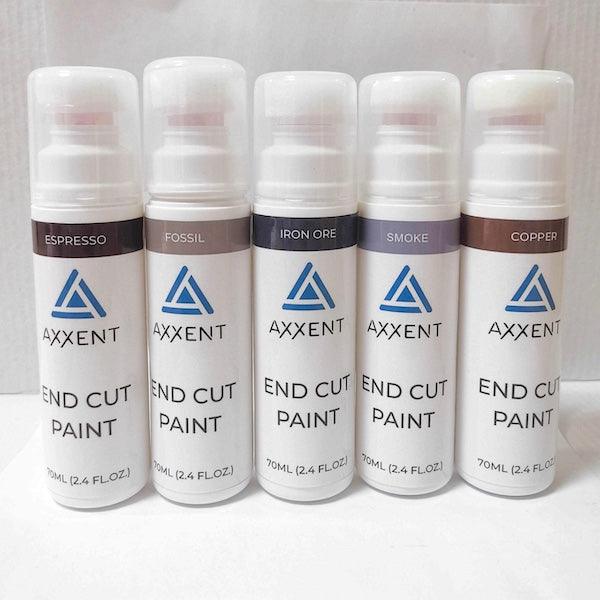
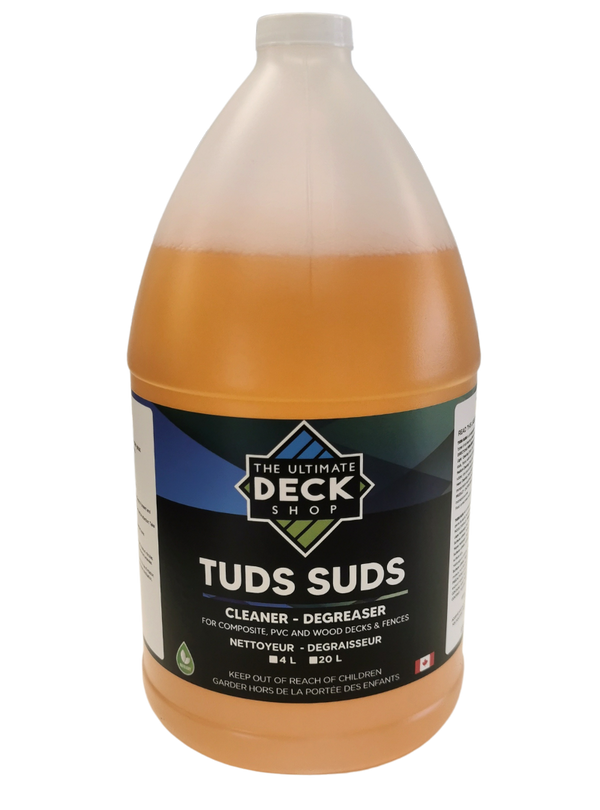
The three add-ons that directly mitigate the cons above — Camo for single-board swap (scratch con), Axxent for end-cut sealing (water con), TUDS-Suds for cap-safe cleaning (mould con).

Clips de bord camouflageHidden fastener

Camo Edge Clips

Universal hidden-clip system for grooved composite + PVC. Lets you swap a single damaged board without disturbing the rest — directly addresses the 'capstock scratch' con.

$54.19 starting
Peinture de coupe d'extrémité AxxentBoard-end finish

Axxent End-Cut Paint

Seals the cut ends of composite boards so the lighter core doesn't show. Eight colour shades — match to your tier colour.

$24.99
TUDS SUDS Deck CleanerCleaner

TUDS SUDS Deck Cleaner

Our house-brand cleaner, formulated for composite + wood decks. Non-caustic, non-butyl, eco-friendly.

$29.99
Official resources

Straight from the manufacturer. Everything technical.

Video

The 20-year cost math — composite vs. wood

Cost analysis
Video

Eva-Last Apex PLUS — the mid-tier composite walkthrough

Mid-tier
Video

Composite deck install walkthrough

Install
FAQ — composite pros and cons

The 9 questions Canadian homeowners ask before they commit.

Don't see yours? Call either showroom and one of our Escape Artists will walk you through it.

For a homeowner planning to keep the house 10+ years: yes. The upfront cost is roughly 2x pressure-treated wood, but composite eliminates stain-and-seal cycles ($300–$600 every 2–3 years), avoids the partial rebuild PT needs inside 15 years, and ships with a 25–50 year warranty. The 20-year carrying-cost math typically lands within 20% of PT — and composite still looks new on year 19. Composite is NOT worth it if you're flipping the house in under 5 years (the upfront premium doesn't pay back) or if cash budget is genuinely tight (entry-tier composite at $60–$70 / sq ft installed narrows the gap, but PT wins on cheque-today). For deeper math, see our deck cost guide.

All decking gets hot in direct sun — wood, composite, and PVC. The differences between tiers are real but smaller than internet forums suggest. Saskatchewan summer surface-temperature data, full sun, 28C ambient: dark mineral-core composite ~60–65C, lighter capped composite ~50–55C, PVC capstock (Eva-Last Pioneer, Trex Signature) ~48–52C, cedar ~45–50C, pressure-treated grey ~55C [VERIFY current vendor cool-deck spec sheets]. Practical takeaway: on south-west-facing decks without cover, choose lighter colours or step up to PVC tier. On covered, north-facing, or shaded decks — heat is a non-issue at any tier. Trex CoolDeck colours and Deckorators mineral-core boards are the cool-running standouts in 2026.

The honest list: (1) Higher upfront cost — roughly 2x pressure-treated, even if the 20-year math wins. (2) Deep-gouge repair — surface scuffs are invisible, but if you drag steel furniture or drop a hammer claw through the cap, you can't sand it out the way you can with wood; you live with the patch or swap the single board. (3) Heat retention on dark mineral-core boards in full sun (mitigated by lighter colours or PVC capstock). (4) Weight — 60–80% heavier than PT, which matters for resurfacing projects on older substructures. (5) Limited colour palette vs. wood that can be stained any custom tone. None of these are deal-breakers for most Prairie homeowners — they're trade-offs against the maintenance-free, splinter-free, 25–50 year lifespan side of the equation.

Manufacturer warranties on premium-tier composite stocked at TUDS run 25 years residential (Trex Transcend, Eva-Last Apex PLUS, Fiberon Sanctuary, Deckorators Voyage) and 50 years residential on PVC-cap tier (Eva-Last Pioneer, Trex Signature, Deckorators Vault). Real-world Saskatchewan field life on capped-composite boards installed since 2008–2010 is matching warranty expectations — boards we sold to early adopters are still in service with no fade, no splinter, no replacement. Compared to pressure-treated wood (10–15 yr typical Prairie service life with refinishing) and cedar (15–25 yr with annual oil), composite is the longest-service deck material on the Prairies short of tropical hardwood.

Real homeowner complaints sourced from forums, reviews, and warranty cases TUDS has handled over 10+ years: (1) Heat retention on dark colours (legitimate — choose lighter or PVC tier). (2) Surface fuzz on legacy uncapped composite from the early 2000s (mostly off-market in 2026 — every brand TUDS stocks today is capped). (3) Mould in shaded, damp, poorly-ventilated zones — solved by annual scrub and proper joist airflow during install. (4) Single-board scratch from steel furniture — solved by furniture-leg pads. (5) Visible cap fade on the deepest-black colours over 15+ years. The complaints that show up most are tier-mismatched: customers who picked entry-tier for a problem premium-tier was designed to handle (e.g., entry-tier on a south-west full-sun deck). Walking into a showroom and matching tier-to-conditions solves 80% of the complaint pattern.

Day-to-day scuffs from chairs, dog claws, and plastic snow shovels don't penetrate the cap and don't show. The cap on a capped-composite board is a continuous polymer skin designed to handle daily abuse. Where it can scratch visibly: dragging steel patio furniture (especially metal-leg fire pits and BBQs) without leg pads; dropping sharp tools like a hammer claw or pry bar; metal snow shovels with chipped edges. The harder PVC capstock (Eva-Last Pioneer, Trex Signature) handles drag better than softer PE caps. If a scratch happens: small ones are usually invisible after 30 days as UV evens the surface; deep gouges through the cap need either acceptance (small patch, most owners go this route) or a single-board swap (easy with a hidden-fastener install).

Mould is a conditions problem, not a material problem. Capped composite resists mould far better than uncapped wood, but the cap doesn't make it impossible. Where mould shows up: shaded, damp, poorly-ventilated zones — typically deep-corner under a covered porch where airflow is restricted and water doesn't dry quickly. The fix is preventive: ensure proper joist spacing during install (most 2026 vendor install guides specify air-gap requirements), keep gaps between boards clean of organic debris (leaves, pine needles), and run an annual soap-and-water scrub on shaded zones. If mould has already taken hold: oxygenated-bleach cleaners (TUDS-Suds, vendor-recommended cleaners like Corte-Clean) clear it without damaging the cap. Pressure washing under 1500 PSI with a fan tip is also safe on most capped boards [VERIFY vendor-specific PSI limits].

Wood is the right answer in three honest scenarios: (1) You're flipping the house in under 5 years — the upfront composite premium won't pay back and PT + a good Cutek finish looks great for the listing photos. (2) You want a very specific custom colour that doesn't exist in any composite swatch palette — wood + custom-tinted Cutek can match any tone you can imagine, and you can re-stain to a different colour every couple of years. (3) You enjoy the maintenance ritual — some homeowners genuinely like sanding-and-staining their deck every spring as part of the season opening. If none of those three apply, composite usually wins on 20-year math.

Composite is better-suited to Prairie freeze-thaw than wood. The polymer matrix doesn't absorb water the way wood grain does, so you don't get the cycle-of-cracking that splits PT and cedar over 10–15 winters. Approved snow-removal practice: plastic shovels only (metal blades can chip the cap), and calcium chloride or magnesium chloride ice melt are vendor-approved on most capped boards. Avoid rock salt (sodium chloride) on premium PVC tiers — some manufacturers exclude warranty coverage if it's used [VERIFY current vendor warranty PDFs]. Ten years of TUDS field installs in Saskatoon and Regina confirm composite handles -40C cold-snaps and 30-degree freeze-thaw swings without dimensional issues.

From TUDS

Composite content. Honest, weekly.

We write about composite a lot because customers ask about it more than anything else. Here's where the fresh stuff lives.

Latest from TUDS · YouTube

Watch the latest from TUDS

Unboxings, install walkthroughs, brand comparisons. New video most weeks — the player above always shows our latest.

Subscribe on YouTube →
The TUDS Podcast

The Deckheads

Honest talk about real projects, real mistakes, and Prairie deck-building. Long-form, for homeowners and pros alike.

Follow along — daily builds, honest takes.
Why TUDS

The deck shop Saskatchewan homeowners cross-shop with.

Real Google reviews from real Saskatoon and Regina customers — pros AND cons on the table from day one.

2016
Canadian-owned since
2
Stores — Regina & Saskatoon
90+
Authorized brands
10,000+
Customers helped
4.9
TUDS Google rating
★★★★★
GGoogle

“We recently gave our 20 year old wood deck a makeover with the help of The Ultimate Deck Shop. Justin at the Regina location was incredibly helpful with each of my visits, answering my questions and explaining/showing me things clearly. To refinish the top of the deck, we used Cutek Wood Reviver followed by Cutek Ex...”

Nicole N.
Regina · Jul 2025
★★★★★
GGoogle

“We had a great experience with The Ultimate Deck Shop. The fence we purchased is great quality. The service was amazing. The price was the best around. We would highly recommend to anyone and will definitely refer family and friends.”

Denise A.
Regina · Nov 2025
★★★★★
GGoogle

“Amazing service (Sam was super helpful and patient). Beautiful options, all staff were friendly. Highly recommend.”

Nikki H.
Regina · Jul 2025
Touch the boards on a hot day

Saskatoon, Regina, and across the prairies.

Two full yards. Every composite tier on display. Feel the heat-retention difference between dark mineral-core and PVC capstock with your hand on a 25C day — the data sheet won't tell you what your hand will.

Store

Regina

141 4th Avenue East, Regina SK

Walk in with the question, leave with the answer. Our Escape Artists will put a sample in your hand on a hot day so you can feel the heat-retention difference between tiers.

Mon–Fri 7am–5pm · Sat 9am–3pm

Store

Saskatoon

320 68th Street East, Saskatoon SK

Every composite tier on display side-by-side. Touch the boards, drag a chair across them, see the colour palette in real Saskatchewan light.

Mon–Fri 7am–5pm · Sat 9am–3pm

Service area · Composite decking consultation
SaskatoonReginaMoose JawPrince AlbertYorktonLumsdenWarmanMartensvilleSwift CurrentNorth BattlefordWeyburnEstevanHumboldtMelvilleRosthernTisdaleCalgaryEdmontonWinnipeg+ Most of SK, AB, MB
We help homeowners across Saskatchewan, Alberta, and Manitoba weigh the composite pros-and-cons against their specific deck conditions. Call either yard for a quote on your address and project.
Now make the call

You've read both sides. Now build it right.

If composite is the right answer for your project — plug your dimensions into the instant estimator below for a Saskatchewan-specific number, or come walk the boards in Saskatoon or Regina. One of our Escape Artists will price every tier on the spot and put a sample in your hand on a hot day. No pressure, no obligation, no spam.