

Thinking about a deck project in Balgonie, SK? You’re not alone—the flat prairies beg for a space to soak up sunsets with family and friends. At The Ultimate Deck Shop, we’ve spent years helping Balgonie homeowners and contractors take deck dreams from paperwork to backyard reality. In this guide, we’ll share our hard-won insights on getting permits sorted, selecting rock-solid foundations that thrive in Saskatchewan clay, and why fall could be the ideal time to start your build.

Understanding Deck Permits in Balgonie, SK
If you’ve chatted with us in-store or called for advice, you know we stress this: building permits are the backbone of any lasting deck. Balgonie’s requirements align closely with other Saskatchewan towns, but even a small oversight can cause months of headaches if not managed right. Here’s what matters most:
-
Permit is required if your deck:
- Is attached to the house
- Stands over 60 cm (2 feet) above the ground at any point
- Will be covered by a pergola, awning, or roof
- Changes in size, structure, or location—beyond surface repairs
-
No permit required if:
- The deck is 60 cm or less above grade and uncovered
- You’re only replacing worn deck boards, steps, or railings without changing framing or layout
From experience, the application process rewards planners. It involves:
- Preparing documents: site plan showing property lines, detailed deck drawings with framing and supports, plus property legal description
- Emailing plans in PDF form to the Town of Balgonie office for review (download the latest deck permit form here)
- Paying fees—typically within $80-$150 (confirm with town officials for the current total)
- Waiting for approval before breaking ground (never start construction before receiving the green light!)
- Having key inspections done—usually footing, framing, and a final check before use
Permits aren’t just red tape. They protect your investment, ensure safe footings and rail heights, and safeguard against future fines or resale issues. Our DIY Deck Building guide lays out Saskatchewan permitting and inspection steps in even more detail, including common pitfalls we see every year.
Deck Foundation Choices: Building Strong in Prairie Clay
Balgonie’s soil is infamously challenging in spring and fall—expanding when wet, shifting during freeze-thaw, and packed with clay in some spots. Choosing the right footing is essential. Here’s our on-the-ground experience:
1. Helical Screw Piles
- Depth: Installed well below the frost line (minimum 48 inches as required locally)
- Why we like them: Engineered for Saskatchewan, they work in tough yard conditions and allow you to frame immediately—no waiting for concrete cures
- Best for: Larger decks, multi-levels, covered patios, and anything attached to the house. Cost per pile tends to be $250-$350 installed (most 12x16 decks use 5-8 piles)
- Bonus: No digging, and installs in cold or wet weather. You avoid future frost heave headaches.
Want a deep dive on correct sizing and planning? Check our latest advice in the DIY Deck Building cluster or ask one of our staff—we’ve coordinated hundreds of pile installs from Regina to Balgonie.
2. GH Leveller Adjustable Supports
- Features: These let you micro-adjust deck level without fuss, making them perfect for smaller, ground-level decks or patios, even on uneven yards.
- Cost: Starting at $24.99 per unit—they’re a DIYer’s dream for smaller projects without renting heavy equipment.
- DIY approved: If you’re hoping to build a floating deck up to 24 inches high for your firepit or shed, the GH Leveller can be set up in minutes.
See the GH Leveller in action and get technical info here.
3. Traditional Poured Concrete Footings and Deck Blocks
-
Poured Concrete:
- Still the old standby—great for heavy or permanent structures. Must be placed below the frost line (4 ft minimum in this region). We rarely see failures if installed right, but plan for a couple of days cure time.
-
Deck Blocks:
- Simple, affordable, but only truly suited to small, unattached floating decks. In wet or shifting soils, they can move and throw your framing out of level over the years.
Decking near your house? Local code often requires footings to match your home’s foundation depth for close-in decks. For neighborhood Balgonie builds, that usually means screw piles or deep concrete. For a special guide on footing types and comparisons, check our guide to deck blocks and footing codes here or explore a full foundation comparison.
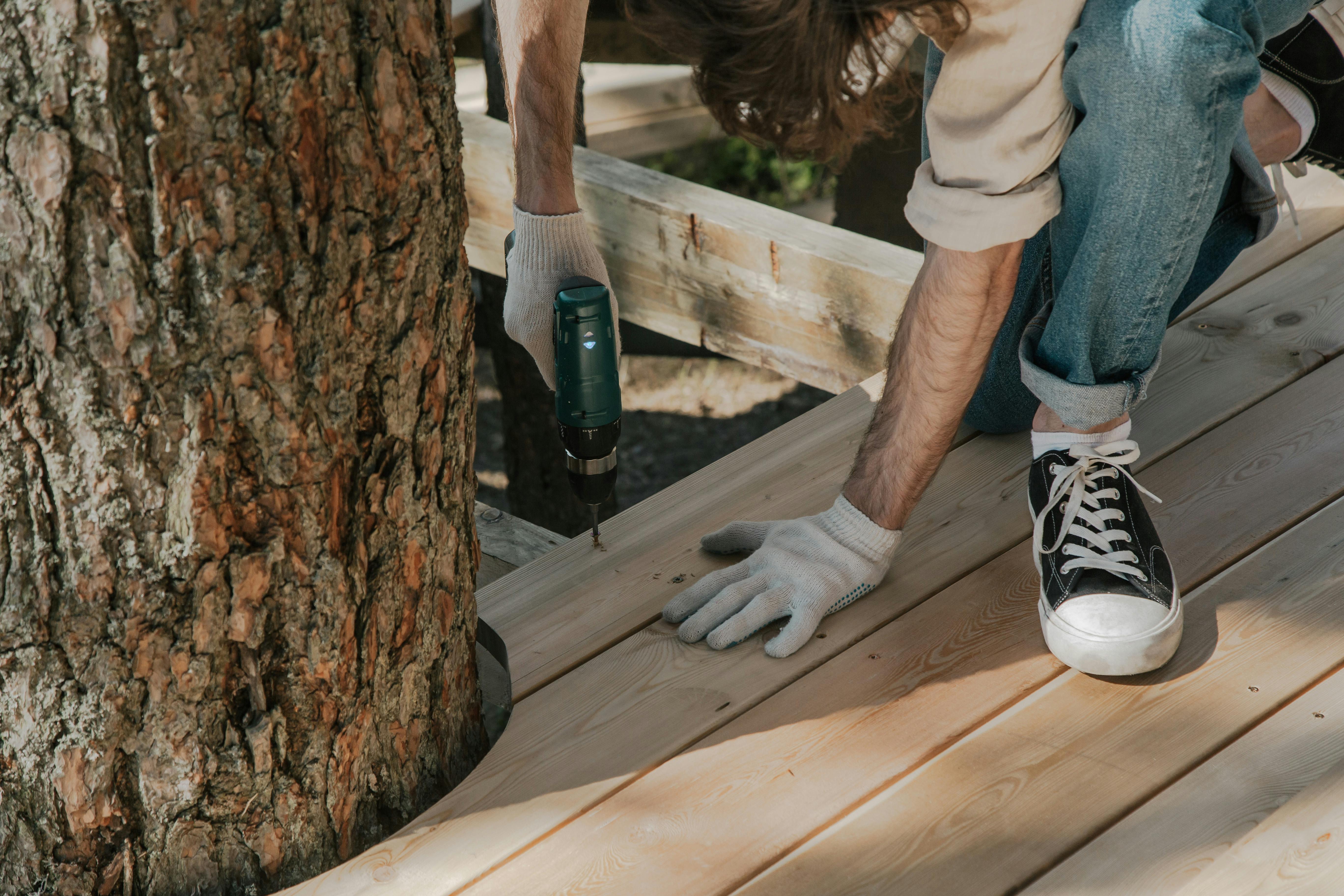
Fall Build Advantages: Why Autumn is the Sweet Spot in Balgonie
We see two peaks for deck construction: the spring panic (when everyone wants it done by May long weekend) and the smart folks who wait for autumn. Why do we recommend seriously considering a fall start?
- Material deals and labor savings: Off-season rates for contractors and suppliers often drop as demand slows. Customers regularly save 10–20% on labor and materials compared to summer.
- Faster permits, less waiting: With fewer applications on the desk, town offices process permits more quickly. Fall jobs can get approved in days instead of weeks in the busy spring.
- Best for footings and framing: With stable ground moisture and cooler temps, fall is prime time for installing screw piles or pouring concrete. Less rain means less downtime!
- Contractor and pro access: Schedules clear up—so you get your pick of top installers, with more one-on-one attention if you need help.
- Hit the ground running in spring: By finishing framing and footings now, you can add lighting, rails, or even outdoor furniture before next season starts.
- Protects against frost heaves: Foundation work done before winter can help prevent costly movement caused by freeze-thaw ground cycles.
If you want more on fall build strategy—and real numbers on savings—our video and companion blog (Fall Deck Building Projects for 2025) go even deeper.
Popular Materials, Tools, and What Makes TUDS Different
Our experience isn’t just from behind the counter. Many of us are DIYers or contractors ourselves, and we keep stock that genuinely performs in Saskatchewan’s climate. Here’s what you’ll find (and what our regulars love):
- Decking: Pressure-treated, cedar, and composite from the best names—ask us about Trex, Fiberon, MoistureShield, and Deckorators (if you want to compare composite vs. wood, check our deep dive: Composite vs. Wood Decking in Saskatchewan).
- Tool Rentals: Camo fastener systems, screw pile drivers, leveling tools (including GH Leveller)—borrow pro gear for a weekend, return hassle-free.
- Design Support: If you’re stuck on layout or codes, book a free session for design or permit questions. We offer 3D planning and walk you through the Balgonie process step by step.
- Prompt Local Delivery: Balgonie is one of our core communities. We deliver deck packages, framing, and accessories on your chosen date. Our drivers go the extra mile (see our reviews!)
For firsthand experience on how our team supports projects at every phase, check our Google Reviews and stories where local homeowners share their deck-building journeys. If you’re at the research stage, our DIY Deck Building cluster (step-by-step deck building, permit checklists, and planning tips) is designed specifically for Saskatchewan DIYers.
Frequently Asked Questions for Balgonie Deck Projects
- How deep do footings need to be? Always below the frost line (minimum 48" in southern Saskatchewan). Screw piles or deep concrete footings are needed for most attached decks. Deck blocks are only for small, low, floating projects.
- Can I build before permit approval? No. Wait for deck permit approval from town officials before starting any construction.
- How long does a typical fall build take? Most 12x16 decks are completed in 7-18 days from permit to final inspection in fall, depending on complexity and weather.
- Do I need engineered plans? Only for complex or covered decks, very large structures, or if required by the Town of Balgonie in your review.
More answers can be found in our DIY deck resource hub and specialized guides for deck installation, footing codes, and decking trends.
How to Get Started (And Where We Can Help)
- Download the Balgonie deck permit form and sketch your dream layout
- Visit us in Regina, call, or use our contact page to arrange a free design and material consult
- Ask our crew to review your plans and help pick the best footing for your site (and budget)
- Decide if fully managed, assisted DIY, or complete DIY is your match—see comparisons in the handy DIY Deck Building cluster
- Order, schedule, and build with confidence—our team and delivery drivers have your back
Whether you’re building your first deck or your tenth, the right preparation and support make all the difference. The Ultimate Deck Shop’s DIY and Pro resources will guide you every step of the way, and for locals—we know precisely what works in Balgonie yards (because we’ve helped build there, too!).
Curious about new trends, advanced materials for Saskatchewan, or want material calculators and more permit tips? Explore our full range of deck-building guides and inspiration on our DIY Deck Building hub and reach out anytime if you need help getting started. We can’t wait to see your deck project take shape this season.


