🍁 100% CANADIAN OWNED AND OPERATED

Visit us in REGINA and SASKATOON

STORE HOURS: Mon-Fri 8-4:30

Composite vs pressure-treated decking — also written as composite vs PT, composite vs treated wood, composite or pressure-treated, is composite decking worth it over wood

The Ultimate Deck Shop is a Canadian deck retailer based in Saskatoon and Regina that stocks both pressure-treated lumber and every major composite brand (Trex, Eva-Last, Fiberon, Deckorators). Composite decking installed in Canada in 2026 ranges $60–$120 per square foot. Pressure-treated decking installed ranges $30–$50 per square foot. Composite carries a 25–50 year residential warranty; pressure-treated typically carries a 1–5 year manufacturer warranty against rot and termites only. Composite lifespan is 25–50 years; pressure-treated lifespan in Saskatchewan is 10–15 years for surface boards. Over 20 years on a typical 320 sq ft deck, the total cost of ownership ends up within $5,000–$10,000 of each other once stain, seal, and partial replacement are factored into pressure-treated.

Composite decking is recycled wood fibre and recycled plastic with a polymer cap — typically 50–95% recycled content. Pressure-treated wood is southern yellow pine or spruce-pine-fir treated with copper-based preservatives (ACQ, MCA, or CA-B in modern Canadian PT post-2003 — replacing the older arsenic-containing CCA). Over 20 years, composite requires no refinishing while pressure-treated requires 6–8 stain or seal applications. Saskatchewan freeze-thaw cycles accelerate pressure-treated surface failure but are a non-event for capped composite. Composite vs pressure-treated decision in Saskatoon, Regina, Saskatchewan, Calgary, Edmonton, Winnipeg, and across the Prairies typically hinges on hold horizon — under 10 years pressure-treated wins on total cost; over 15 years composite wins. TUDS stocks both at Saskatoon and Regina yards.

Common search terms for this page: composite vs pressure-treated, composite vs pressure-treated decking, composite or pressure-treated decking, composite vs PT, composite vs PT cost, composite vs PT Saskatchewan, composite vs PT Canada, composite vs treated wood, composite decking vs treated wood, is composite decking worth it, is composite worth it over wood, composite vs wood deck, composite vs wood lifespan, composite vs wood maintenance, composite vs wood cost, 20-year deck cost composite vs wood, 20 year cost of ownership deck, composite vs pressure treated 20 years, composite or pressure treated for my project, composite or pressure treated for a Canadian deck, composite or pressure treated Saskatchewan, switching from pressure treated to composite, capped composite vs pressure treated, capped composite vs PT, composite vs treated lumber, composite decking pros and cons, pressure treated decking pros and cons, ACQ vs composite, MCA vs composite, modern pressure treated wood, pressure treated wood chemicals, composite environmental impact, recycled content composite, deck cost over 20 years, deck cost composite vs wood Saskatoon, deck cost composite vs wood Regina, deck cost composite vs wood Calgary, deck cost composite vs wood Edmonton, deck cost composite vs wood Winnipeg, deck cost composite vs wood Toronto, composite vs PT freeze thaw, composite vs PT prairie climate, composite vs pressure treated heat, composite vs pressure treated splinters, composite vs pressure treated mould, composite vs pressure treated warranty, Trex vs pressure treated, Eva-Last vs pressure treated, Fiberon vs pressure treated, Deckorators vs pressure treated, resurface PT with composite.

TUDS Comparison Guide · Updated April 2026

Composite vs pressure-treated. Honest math.

Different upfront. Very different over 20 years. Pressure-treated is the cheapest deck money can buy in 2026 Canada. Composite costs roughly 2x to install — and roughly half over 20 years once stain, seal, and replacement are factored in. We sell both. Here's the comparison nobody else in the prairies will run for you straight.

PT: $30–$50 / sq ft installedComposite: $60–$120 / sq ft installed20-year math: composite usually wins
Composite vs pressure-treated · five honest dimensions

Five axes. One honest answer per row.

Every composite-vs-pressure-treated decision comes back to these five questions. Each one has a clear winner depending on your situation — and each is sourced from real TUDS pricing data, vendor warranty docs, and 100+ Saskatchewan project files.

Composite vs pressure-treated upfront cost — PT installed at $30 to $50 per sq ft vs composite at $60 to $120 per sq ft on a typical Saskatchewan backyard deck
PT wins Tier
By roughly 2x

Upfront cost

PT wins on day one. Roughly 2x cheaper to install. The cheque you write today is genuinely smaller.

Pressure-treated installed: $30–$50 per sq ft in Canada in 2026 (board + framing + fasteners + labour). Composite installed: $60–$120 per sq ft. On a 320 sq ft deck the upfront gap is $9,000–$22,000 — real money, not a rounding error. Material-only: PT runs $4–$8/sq ft; composite runs $14–$28/sq ft. Where PT genuinely makes sense: tightest budgets, rental properties, decks you intend to replace inside 10 years, transition houses you'll sell before the surface boards fail. The 20-year math (next axis) only matters if you'll be there for the 20 years.

PT installed
$30–$50 / sq ft
Composite installed
$60–$120 / sq ft
Gap on 320 sq ft
$9k–$22k
Material-only PT
$4–$8 / sq ft
Material-only comp
$14–$28 / sq ft
Best for upfront
Pressure-treated
Lifespan comparison composite vs pressure-treated — 25 to 50 year warranty on capped composite vs 10 to 15 year typical PT deck life in Saskatchewan freeze-thaw
Composite wins Tier
By 2–3x

Lifespan

Composite wins long. Capped composite carries 25–50 yr warranties. PT typically gets 10–15 yr in the Prairies before the surface goes.

Pressure-treated lifespan in Saskatchewan: 10–15 years for the surface boards before splintering, cracking, and stain wash-out demand replacement. The framing underneath (also PT) often outlasts the deck boards by 5–10 years if it stayed dry. Composite lifespan: 25–50 years depending on tier. Entry-tier capped composite (Fiberon GoodLife, Eva-Last Infinity IS) carries 25-year residential warranty; premium tier (Trex Transcend, Eva-Last Apex PLUS, Deckorators Voyage) carries 25–35 year; capped polymer / PVC tops out at 50-year residential. Saskatchewan freeze-thaw note: Prairie freeze-thaw cycles are brutal on PT — repeated water absorption + sub-zero expansion accelerates checking and surface failure. Composite doesn't absorb water in the cap, so freeze-thaw is a non-event.

PT lifespan
10–15 years
Composite lifespan
25–50 years
PT warranty
1–5 yr (manufacturer)
Composite warranty
25–50 yr residential
Freeze-thaw impact
PT high · Comp minimal
Best for longevity
Composite
Maintenance comparison — pressure-treated cedar deck mid-stain in Saskatchewan vs composite deck zero-maintenance cap technology
Composite wins Tier
Annual ritual vs zero

Maintenance

PT needs an annual or biennial ritual. Composite gets a rinse. That's the difference.

Pressure-treated maintenance schedule: stain or seal every 2–3 years to fight UV, water, and Prairie freeze-thaw. Cost per application on a 320 sq ft deck: $300–$600 in product + a full weekend of labour. Skip a cycle and you'll fight silvering, splintering, and surface mould the next year. Cutek-style penetrating oil finishes are the gold standard in Saskatchewan — see our Cutek Extreme guide. Composite maintenance schedule: rinse with garden hose 2–4 times a year. Soap-and-water clean once a year on high-traffic areas. That's it. The cap is engineered to shrug off mould, stains, and UV. 20-year ritual cost: 6–8 PT refinishes = $1,800–$4,800 in product alone, not counting your weekends. Composite: zero.

PT schedule
Stain every 2–3 yr
Composite schedule
Rinse + clean
PT cost / application
$300–$600
PT 20-yr maintenance
$1,800–$4,800
Composite 20-yr maint
$0
Best for set-and-forget
Composite
20-year cost of ownership composite vs pressure-treated — composite total cost roughly equal to install while PT total runs install plus 6 to 8 refinishes plus partial replacement
Composite wins Tier
The math you didn't run

20-year cost of ownership

PT looks cheap on day one. Composite looks cheap on year 20. Run the math both ways.

The math on a 320 sq ft Saskatchewan deck over 20 years (mid-tier on each):

Pressure-treated total: $13,000 install (mid of $30–$50 × 320) + 7 refinishes × $450 each ($3,150) + partial surface-board replacement around year 12–15 ($4,000–$6,000 in materials and labour) = roughly $20,000–$22,000 over 20 years.

Composite total: $28,800 install (mid of $60–$120 × 320, mid-tier composite around $90/sq ft) + zero maintenance + zero replacement = roughly $28,800 over 20 years.

Net delta: composite ends up $7,000–$9,000 more over 20 years — roughly $350–$450 per year for a deck that always looks new, never needs staining, and doesn't have a rebuild on the horizon. Most homeowners running this math the first time stop feeling clever about saving $15,000 upfront. Full deck cost guide for Canada.

PT 20-yr total
$20k–$22k
Composite 20-yr total
$28k–$30k
Annual delta
~$400 / yr
PT refinishes
6–8 cycles
Composite refinishes
Zero
Looks-new on yr 19
Composite only
Environmental comparison — pressure-treated wood with copper-based preservative chemicals vs composite decking made from recycled wood fibre and recycled plastic with polymer cap
Both honest Tier
Different tradeoffs

Environmental

Neither is perfect. PT is chemicals. Composite is recycled wood and plastic. Pick your tradeoff.

Pressure-treated chemistry: modern PT in Canada (post-2003) uses copper-based preservatives — typically ACQ (alkaline copper quaternary), MCA (micronized copper azole), or CA-B (copper azole type B). These replaced the older CCA (chromated copper arsenate) which contained arsenic and was phased out for residential use. The current-generation chemistry is much safer than CCA but still: don't burn PT scraps, don't compost the sawdust, and use gloves when cutting. Composite chemistry: typically 50–95% recycled content — recycled wood fibre (from sawmill waste) + recycled plastic (HDPE, PE, or PP, often from grocery bags and milk jugs) + a virgin polymer cap. Brands like Trex divert hundreds of millions of pounds of plastic from landfill annually. End of life: PT is hazardous waste in most municipalities; composite is increasingly recyclable through manufacturer take-back programs. Honest take: if environmental impact is your dominant filter, composite is the better answer in 2026 — but it's not a perfect answer.

PT chemistry
Copper preservatives
Composite chemistry
Recycled wood + plastic
Recycled content
Composite 50–95%
Burn-safe?
PT no · Comp no
Landfill diversion
Composite yes
Greener choice
Composite (most metrics)
2-minute decision quiz

Composite or pressure-treated for your project?

Five questions about budget, hold horizon, maintenance tolerance, environmental priority, and aesthetic preference. Honest recommendation. No email required.

Question 1 of 5
0% complete

What matters more — upfront cost or 20-year cost?

If you walked into TUDS

The three composite-vs-PT questions we get every week — and what we'd actually answer.

"Just give it to me straight — is composite worth the extra money?"
Shane · Co-owner
Shane · Co-owner

Honest answer: over 20 years, the total cost of ownership ends up within $5,000–$10,000 of each other on a typical 320 sq ft deck — and composite spends zero weekends every spring on a stain ritual. If you're going to own the deck for 15+ years, composite is almost always the right call. If you're going to own it for 8 years and sell, pressure-treated wins. The question isn't really 'is composite worth it' — it's 'how long are you keeping the deck.'

Run the math in the calculator
"How often do I actually have to stain pressure-treated in Saskatchewan?"
Wade · Co-owner
Wade · Co-owner

In Saskatchewan, every 2–3 years is the realistic schedule for a PT deck if you want it to last 15 years and not look silver-grey by year 4. Some homeowners stretch it to year 4–5 between coats — those decks fail noticeably faster. Cutek's penetrating oil is what we recommend in our climate because it doesn't peel like film-forming stains do under freeze-thaw. Cutek Extreme guide walks through the schedule. Annual cost is $300–$600 in product on a typical 320 sq ft deck plus your weekend.

Cutek Extreme guide
"Can I switch from PT to composite without rebuilding the frame?"
Shane · Co-owner
Shane · Co-owner

Usually yes — the framing under most PT decks is itself PT and tends to outlast the surface boards. If the joists are sound (no rot, no warping, joist spacing matches your composite brand's spec — typically 12" or 16" on-centre), you can resurface in composite over the existing frame. A 320 sq ft resurface in composite costs roughly $35–$70 per sq ft (no demo of the frame, no new piers) — that's a $11,000–$22,000 project vs $19,000–$38,000 for a full rebuild. Bring photos of the underside and a tape measure to either showroom and one of our Escape Artists will tell you straight what's salvageable.

Visit a showroom
The comparison table · 13 attributes

Side-by-side reality, row by row.

Scope: Capped composite (wood fibre + plastic + cap) vs modern Canadian pressure-treated (ACQ / MCA / CA-B copper preservative). Numbers from TUDS 2024–2026 project history + vendor warranty docs + public Canadian cost-guide data. Both are legitimate choices — this table shows where each one wins. Composite vs PVC comparison · Full Canadian deck cost guide.

Attribute Composite (capped)Pressure-treated
Upfront cost / sq ft installed $60–$120$30–$50
Material-only cost / sq ft $14–$28$4–$8
Lifespan (Saskatchewan) 25–50 yr10–15 yr
Annual maintenance Wash with soap + waterStain or seal yearly to biennial ($1–$2 / sq ft)
Replacement cost over 30 yr 0–1 replacement2–3 replacements
Heat retention Moderate (varies by colour)Low
Splinters / cracks NeverYes (annual)
Mould / staining Capstock-resistantYes (yearly fight)
Colour options 15–30 brand coloursStain choice each refresh
Warranty (residential) 25–50 yrManufacturer 1–5 yr
Environmental Recycled wood + plasticCopper preservative chemicals
20-year total (320 sq ft) ~$28k–$30k (install only)~$20k–$22k (install + 7 refinishes + partial replacement)
Best for Long-term value, low maintenanceTightest budget, short hold
Read: Composite vs PVC — the next-tier-up comparison
Side-by-side cost calculator

Plug in your dimensions, see both materials priced.

Width × length, or total square feet. Calculator shows pressure-treated, entry-tier composite, premium composite, and capped polymer / PVC priced for your sq ft — installed cost, framing + labour included.

100 ft² 1,000 ft² 2,000 ft²
Area priced
320sq ft

Estimates exclude railing, stairs, lighting, permits, and demolition. For a real Saskatchewan-specific number on your project, use the instant estimator.

Pressure-treated wood
Pressure-treated
approximate · boards only
Capped composite — entry tier
Entry composite
approximate · boards only
Capped polymer / PVC — luxury tier
Capped polymer / PVC
approximate · boards only
Both materials need finishing

Fasteners, finishing, cleaning.

PT decks face-screw with stainless or coated deck screws and need annual stain. Composite uses hidden clip systems and gets a soap-and-water clean. House-brand cleaner is safe on both.

Camo Edge ClipsHidden fastener

Camo Edge Clips

Universal hidden-clip system for grooved composite. Budget $0.50–$0.90 per board for a typical install. PT decks typically face-screw with stainless or coated deck screws.

$54.19 starting
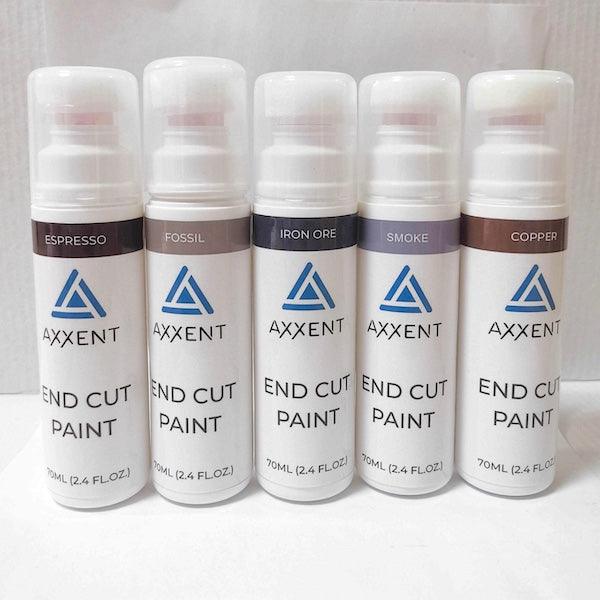
Axxent End Cut PaintBoard-end finish

Axxent End-Cut Paint

Seals the cut ends of composite boards so the lighter core doesn't show. Eight colour shades — match to your tier colour.

$24.99
TUDS SUDS Deck CleanerCleaner

TUDS SUDS Deck Cleaner

Our house-brand cleaner, formulated for composite + wood decks. Non-caustic, non-butyl, eco-friendly.

$29.99
Official resources

Straight from the manufacturer. Everything technical.

Video

Why composite wins on 20-year cost

Cost analysis
Video

Eva-Last Apex PLUS — premium-tier composite walkthrough

Premium tier
Video

Composite deck installation walkthrough

Install
FAQ — composite vs PT, answered

The 10 questions homeowners ask before they decide.

Don't see yours? Call either showroom and one of our Escape Artists will walk you through it.

Over 20 years on a typical 320 sq ft Saskatchewan deck, the total cost of ownership comes within roughly $5,000–$10,000 of pressure-treated once stain, seal, and partial replacement are factored in. The composite premium works out to $350–$500 per year — for that you get zero stain weekends, no splinters, no mould fight, no surface-board replacement on the horizon, and a deck that still looks new on year 19. If you'll own the deck 15+ years, composite is usually the rational answer. Under 10 years, pressure-treated wins.

Every 2–3 years is the realistic schedule for a Saskatchewan pressure-treated deck. The Prairie freeze-thaw cycle accelerates UV silvering and surface checking — homeowners who stretch to year 4–5 between coats see noticeably faster failure. Cost per application: $300–$600 in product on a 320 sq ft deck plus a full weekend of labour. Penetrating oils like Cutek Extreme outperform film-forming stains in our climate because they don't peel under freeze-thaw expansion.

Surface boards typically last 10–15 years in Saskatchewan before splintering, cracking, and stain wash-out demand replacement. The framing underneath (also pressure-treated) often outlasts the surface by 5–10 years if it stayed dry — so a typical pattern is one full deck build, then a surface-only resurface around year 12–15, then a full rebuild around year 25. Aggressive maintenance can extend the surface to 18–20 years; skipped maintenance shrinks it to 8–10. Capped composite carries 25–50 year residential warranty for comparison.

Composite residential warranties typically cover 25–50 years and protect against material defects, fade beyond a defined Delta-E threshold, splitting, peeling, and structural failure under normal residential use. Major brands TUDS stocks: Eva-Last 25–50 yr, Trex 25–50 yr, Fiberon 25–50 yr, Deckorators 25–50 yr. Pressure-treated warranties are typically 1–5 years from the treating company against rot and termites only — surface failure (splintering, checking, fade) isn't covered. The vendor owns the claim process in both cases; TUDS helps you navigate but doesn't file claims on your behalf.

Composite runs moderately warmer than pressure-treated in direct sun — varies meaningfully by colour. Light-coloured composite (greys, light browns, weathered-cedar tones) reads close to wood underfoot. Dark composite (espresso, ebony, charred-walnut) reads noticeably warmer than wood at peak summer heat — barefoot-comfortable in the morning and evening, hot at 2pm in July. If barefoot comfort matters, stick to lighter cap colours regardless of brand. Capped polymer / PVC tends to dissipate heat faster than capped composite of equivalent colour. None of the materials are unsafe — it's a comfort question, not a safety one.

Usually yes. The framing under most PT decks is itself pressure-treated and tends to outlast the surface boards by 5–10 years. If the joists are sound (no rot, no significant warping, and joist spacing matches your composite brand's spec — typically 12" or 16" on-centre), you can resurface in composite over the existing frame. A composite resurface costs roughly $35–$70 per sq ft (no demo, no new piers) vs $60–$120 per sq ft for a full rebuild. Bring photos of the joists and a tape measure to either showroom and we'll tell you what's salvageable. Some composite brands require closer joist spacing than PT decks were typically built for — a sister-joist retrofit can solve it.

Pressure-treated uses copper-based preservatives — modern Canadian PT (post-2003) is ACQ, MCA, or CA-B. Less toxic than the older CCA (which contained arsenic) but still chemicals: don't burn the scraps, don't compost the sawdust, use gloves when cutting. Composite is typically 50–95% recycled content — recycled wood fibre from sawmill waste plus recycled plastic (HDPE, PE, or PP) from grocery bags and milk jugs, with a virgin polymer cap. Major brands divert hundreds of millions of pounds of plastic from landfill annually. End of life: PT is hazardous waste in most municipalities; composite is increasingly recyclable through manufacturer take-back. On most environmental metrics composite is the greener answer in 2026 — neither is perfect.

On a typical 320 sq ft Saskatchewan deck (mid-tier on each material): Pressure-treated 20-year total: roughly $20,000–$22,000. That's $13,000 install + 7 refinishes × $450 each ($3,150) + a partial surface-board replacement around year 12–15 ($4,000–$6,000). Composite 20-year total: roughly $28,000–$30,000. That's $28,800 install + zero maintenance + zero replacement. Net delta: composite costs $7,000–$9,000 more over 20 years — roughly $350–$450 per year for zero stain weekends and a deck that always looks new. Full Canadian deck cost guide for ranges across all materials.

Pressure-treated wood is rated for ground-contact and freeze-thaw exposure — it'll structurally survive Saskatchewan winters for 15–25 years on the framing side. The challenge is the surface boards, where freeze-thaw cycles drive water in and out of the grain, accelerating splintering, checking, and stain failure. Typical Saskatchewan PT deck surface life: 10–15 years with regular stain. Composite cap doesn't absorb water, so freeze-thaw is a non-event for the surface. Both materials need frost-rated footings (1.2 metre / 4 ft deep on the Prairies) regardless of which decking goes on top.

Modern Canadian pressure-treated lumber (post-2003) is treated with one of three copper-based preservatives: ACQ (alkaline copper quaternary), MCA (micronized copper azole), or CA-B (copper azole type B). These replaced the older CCA (chromated copper arsenate) which contained arsenic and was phased out for residential use in 2003. The current chemistry is much safer than CCA — but it's still chemicals: don't burn PT scraps, don't compost PT sawdust, wear gloves when cutting, and dispose of cut-offs in regular construction waste (not in compost or yard waste). The green tint on fresh PT comes from the copper.

From TUDS

More on the composite-vs-wood debate. Honest, weekly.

We write about this a lot because it's the most common question we get. Here's where the fresh stuff lives.

Latest from TUDS · YouTube

Watch the latest from TUDS

Unboxings, install walkthroughs, brand comparisons. New video most weeks — the player above always shows our latest.

Subscribe on YouTube →
The TUDS Podcast

The Deckheads

Honest talk about real projects, real mistakes, and Prairie deck-building. Long-form, for homeowners and pros alike.

Follow along — daily builds, honest takes.
Why TUDS

The deck shop Saskatchewan homeowners cross-shop with.

Real Google reviews from real Saskatoon and Regina customers — across both pressure-treated and composite builds.

2016
Canadian-owned since
2
Stores — Regina & Saskatoon
90+
Authorized brands
10,000+
Customers helped
4.9
TUDS Google rating
★★★★★
GGoogle

“We recently gave our 20 year old wood deck a makeover with the help of The Ultimate Deck Shop. Justin at the Regina location was incredibly helpful with each of my visits, answering my questions and explaining/showing me things clearly. To refinish the top of the deck, we used Cutek Wood Reviver followed by Cutek Ex...”

Nicole N.
Regina · Jul 2025
★★★★★
GGoogle

“We had a great experience with The Ultimate Deck Shop. The fence we purchased is great quality. The service was amazing. The price was the best around. We would highly recommend to anyone and will definitely refer family and friends.”

Denise A.
Regina · Nov 2025
★★★★★
GGoogle

“Amazing service (Sam was super helpful and patient). Beautiful options, all staff were friendly. Highly recommend.”

Nikki H.
Regina · Jul 2025
Walk both decks side by side

Saskatoon, Regina, and across the prairies.

Two yards. Pressure-treated on the rack, every major composite brand on display. Walk both materials, lift each one, run the math with an Escape Artist in 30 minutes.

Store

Regina

141 4th Avenue East, Regina SK

Walk both materials side by side — pressure-treated on the rack, every major composite brand on the wall. Run the 20-year math with one of our Escape Artists in 30 minutes.

Mon–Fri 7am–5pm · Sat 9am–3pm

Store

Saskatoon

320 68th Street East, Saskatoon SK

The deck-decision conversation our customers come to us for. Bring your dimensions, your hold horizon, and your stain-tolerance — we'll tell you which way to go straight.

Mon–Fri 7am–5pm · Sat 9am–3pm

Service area · Composite + PT in stock
SaskatoonReginaMoose JawPrince AlbertYorktonLumsdenWarmanMartensvilleSwift CurrentNorth BattlefordWeyburnEstevanHumboldtMelvilleRosthernTisdaleCalgaryEdmontonWinnipeg+ Most of SK, AB, MB
We deliver across Saskatchewan, Alberta, and Manitoba. Call either yard for a quote on your address and material choice.
Run the math on your deck

You've read the comparison. Now run your numbers.

Plug your dimensions into our instant estimator — it'll spit out a Saskatchewan-specific number on both materials, side by side. Or come walk both decks at our Saskatoon or Regina yard. No pressure, no obligation — just an honest answer for your project.