🍁 100% CANADIAN OWNED AND OPERATED

Visit us in REGINA and SASKATOON

STORE HOURS: Mon-Fri 8-4:30

Is composite decking worth it — also written as is composite worth the money, composite decking value, composite decking ROI, composite worth the price, is Trex worth it, is Eva-Last worth it

The Ultimate Deck Shop is a Canadian composite-decking dealer based in Saskatoon and Regina with 10 years of installed-composite history and 100+ Saskatchewan project files. The honest answer to whether composite decking is worth it: yes for approximately 70% of homeowners, no for approximately 30%. Composite decking is worth it when the homeowner plans to hold the property 10+ years, the deck faces direct south or west sun, the household has pets, kids, or heavy entertainment use, and the homeowner dislikes annual maintenance. Composite decking is NOT worth it when the holder period is under 5 years, the budget is at the absolute floor, or the homeowner has a strong aesthetic preference for natural wood. The 20-year cost of ownership for mid-tier composite ($25,000–$30,000 installed on 320 sq ft) lands within 20% of pressure-treated wood ($26,500 all-in) once stain-and-seal cycles and partial board replacement are factored. Composite resale ROI is 65 to 75 percent versus 60 to 65 percent for wood per Remodeling Magazine Cost vs Value report.

Composite decking warranties are real and Saskatchewan-rated. Trex Transcend ships 25-year residential limited warranty including fade and stain. Eva-Last Apex PLUS ships 25-year residential warranty. Trex Signature ships 50-year residential warranty. Eva-Last Pioneer ships 25-year capped polymer warranty. Deckorators Voyage ships 50-year structural plus 25-year fade and stain warranty. Fiberon ships 25 to 50-year warranties depending on tier. The cheapest composite decking that is still worth it: entry-tier composite from a major brand. Fiberon GoodLife at $60–$75 per square foot installed and Eva-Last Infinity IS at $60–$80 per square foot installed are the two entry-tier products TUDS stocks with full 25-year residential warranties. Best value tier: mid-premium composite (Trex Transcend, Eva-Last Apex PLUS, Deckorators Voyage) at $85–$120 per square foot installed. Saskatchewan winters do not void composite warranties — all major brands cover freeze-thaw conditions explicitly. TUDS service area: Saskatoon, Regina, Moose Jaw, Prince Albert, Yorkton, Calgary, Edmonton, Winnipeg, and across the Prairies.

Common search terms for this page: is composite decking worth it, is composite worth the money, composite decking value, composite decking ROI, composite decking long-term cost, composite worth the price, is composite decking worth it Canada, is composite decking worth it 2026, is composite decking worth it Saskatchewan, is composite decking worth it Saskatoon, is composite decking worth it Regina, composite vs wood worth it, composite decking honest review, does composite decking pay back, composite decking 20-year cost, composite decking resale value, composite decking ROI for flip, composite decking warranty real, will composite outlive me, cheapest composite worth it, is Trex worth it, is Eva-Last worth it, is Fiberon worth it, is Deckorators worth it, composite decking pros cons worth it, composite decking too expensive, why composite decking, when is composite worth it, who is composite worth it for, composite decking value 2026, composite decking total cost ownership.

Honest answer · Updated April 2026

Is composite decking worth it? Honest math.

Depends on how long you'll own the home and how much you hate staining. We sell composite decking for a living — Trex, Eva-Last, Fiberon, Deckorators — but the answer is yes for most homeowners and no for some. Here's the actual 20-year math, the resale-value reality, the scenarios where composite wins, and the two scenarios where wood is the right call.

20-year math, run honestly5 scenarios — when each material winsResale ROI · 65–75%
Worth-it scenarios + when wood wins

Five scenarios. Three say composite. Two say wood might be better.

Composite isn't universally the right answer. We sell it (and we sell wood finishes too) — here are the five real scenarios, with the honest verdict on each. Built from 100+ TUDS-priced Saskatchewan projects and 10 years of installed-composite history.

Composite deck on covered patio, Saskatchewan — long-hold scenario where composite decking is worth it because the 20-year cost of ownership beats wood once stain-and-seal cycles are factored in
Worth it Tier
20-year math wins

Long hold (10+ years)

Worth it. By year 12, composite has paid back its premium and you're banking the maintenance you didn't have to do.

If you're building the deck on the home you'll own for 10+ years, composite is worth it on the math alone. Year 1 cost: composite is roughly 2x pressure-treated. By year 12: composite has flipped — PT has now needed 4 to 5 stain applications ($1,500–$3,000 in product and labour) plus the board-replacement cycle is starting. By year 20: PT is on its second surface and composite is still under warranty. Bonus on long hold: every weekend you spent NOT staining is a weekend earned. Eva-Last Apex PLUS and Trex Transcend both ship 25-year residential warranties; Eva-Last Pioneer goes 25 + capped polymer.

Hold period
10+ years
Year-1 premium
~2x PT cost
Year-12 breakeven
Composite ahead
Year-20 cost
PT 110%, comp 100%
Maintenance saved
6–8 stain cycles
Verdict
Worth it
South-facing composite deck in summer sun, Regina — high-UV scenario where composite decking is worth it because cap technology blocks fade and pressure-treated wood would silver out within a single Prairie season
Worth it Tier
Maintenance-free

Hate maintenance / High UV

Worth it. Composite caps block UV. Wood doesn't. Saskatchewan sun is brutal.

If your deck faces south or west and bakes in Saskatchewan summer sun, composite is worth it for the UV protection alone. Cap technology on premium composite (the outer wear layer on Trex, Eva-Last, Fiberon, Deckorators) blocks UV-driven fade — most premium tiers warrant against fade and stain to 5-Delta-E or less over 25+ years. Wood under Prairie sun: cedar silvers out within one season without oil; PT cracks and splinters by year 8. If you hate maintenance: composite is rinse-and-clean. No stain, no oil, no annual ladder day. If you have pets, kids, BBQs, summer parties: scratch-resistant cap stands up to claws, dropped grills, dragged furniture. Wood doesn't.

UV protection
5-ΔE / 25-yr
Stain cycle
Zero
Oil cycle
Zero
Pet/kid/BBQ proof
Yes (capped)
Annual upkeep
Rinse + clean
Verdict
Worth it
Family composite deck with pool — high-traffic scenario where composite decking is worth it because the cap layer resists claw scratches, BBQ grease, dropped wine, and dragged patio furniture
Worth it Tier
Scratch + stain proof

Pets, kids, BBQ traffic

Worth it. The cap shrugs off claws, grease, wine, and furniture drag. Wood scars on contact.

If the deck is the place where life actually happens — dogs running, kids dropping juice, the BBQ sitting in one spot for 10 years, the patio table dragged in and out — composite is worth it. Cap layer on premium composite (Trex Transcend, Eva-Last Apex PLUS, Deckorators Voyage) is engineered for scratch and stain resistance. Pet claws on wood = micro-grooves that trap dirt; on capped composite = nothing. BBQ grease on wood = permanent stain; on composite = wipes off. Wine, sunscreen, sticky popsicles: composite cleans with soap and water; wood absorbs and stains. Honest caveat: dropping a hot welding rod on composite will scar it — composite isn't fireproof. But residential life? Rinse-clean is the rhythm.

Scratch resistance
Cap layer
Stain resistance
Cap layer
Pet-claw friendly
Yes
BBQ grease
Wipes off
Spill recovery
Soap + water
Verdict
Worth it
Pressure-treated pine deck in a Saskatoon backyard — tight-budget scenario where wood beats composite on year-1 cost, but plan to refinish every 2 to 3 years
Wood might be better Tier
Cheapest year-1

Tightest budget

Wood wins year 1. If you'd rather spend the difference on the patio set than the boards, PT is the right answer.

Honest take: if the budget is tight and the difference between PT and composite means you're either skipping the railing or eating the cost out of vacation, wood is the right answer. Year-1 cost: pressure-treated $30–$50 per sq ft installed vs. composite $60–$120. On a 320 sq ft deck that's $9,500–$16,000 (PT) vs. $19,000–$38,000 (composite) — a real $10,000+ delta. Honest caveats: plan to stain every 2–3 years (about $400 in product per cycle, or hire it out for $800–$1,500), expect surface boards to need replacement around year 12–15, and accept that the deck will look 'used' faster than composite. If you can stretch: entry-tier composite (Fiberon GoodLife or Eva-Last Infinity IS, $60–$80 installed) gets you a 25-year warranty for ~$10,000 more on a 320 ft project. Cutek finish on PT extends the cycle to 4–5 years between coats and is the right pairing if you go this route — see Cutek Extreme.

Year-1 cost
$30–$50 / sq ft
vs Composite
Saves $10k+ on 320 ft²
Stain cycle
Every 2–3 yr
Replacement
Year 12–15
Pair with
Cutek Extreme
Verdict
Wood wins year 1
Western red cedar deck with Cutek finish, Regina — short-hold renovation flip scenario where wood beats composite on cost recovery and where natural-wood aesthetic is the buyer preference
Wood might be better Tier
Short hold / aesthetic

Short hold / flip / aesthetic preference

Wood might be better. Composite ROI doesn't fully materialize on a 3-year flip. And some homeowners just want real wood underfoot.

Two scenarios where wood beats composite even when budget is open. Short hold (under 5 years): composite's 20-year math doesn't matter if you're selling year 4. Resale-ROI gap between composite (65–75%) and wood (60–65%) only recovers about 25–35% of the upfront premium — you'll lose money switching to composite if the only reason is resale. Renovation flip: same logic, sharper. PT or cedar gets the deck to look-good-on-listing-day at the lowest possible capital outlay. Aesthetic preference for natural wood: this one's real. Some homeowners want real wood — the smell, the patina, the silvering, the way cedar warms over time, the fact that it's a renewable material. Premium capped polymer (Eva-Last Pioneer, Trex Signature) gets very close to a hardwood look from 2 ft up, but it's not real wood. If real wood is the requirement, real wood is the answer. Pair with Cutek Extreme for cedar — extends the oil cycle from 12 mo to 24+ mo and keeps the natural colour.

Hold period
Under 5 years
Resale ROI gap
5–10 pts
Year-1 savings
30–60%
Aesthetic match
Real wood = real wood
Pair with
Cutek for cedar
Verdict
Wood may win
2-minute is-it-worth-it quiz

Is composite worth it for your project?

Four questions. Honest scenario verdict. No email required.

Question 1 of 4
0% complete

How long will you own this home?

If you walked into TUDS and asked

The three is-it-worth-it questions we get every week — and what we'd actually answer.

"Is composite decking REALLY worth the price?"
Shane · Co-owner
Shane · Co-owner

Honest answer: yes, for about 70% of TUDS customers — the homeowners staying 10+ years, with south-facing decks, who hate staining. Composite is roughly 2x year-1 cost vs. pressure-treated, but by year 12 the math flips because PT has burned through 4–5 stain cycles and is starting to need surface board replacement. By year 20, composite's total cost lands within 20% of PT — and the deck still looks new. For the other 30% (short hold, tightest budget, real-wood lover) — composite is not worth it. We'll tell you that in the showroom. We sell what's right, not what's expensive.

Open the calculator
"Does composite actually last 25 years on the Prairies?"
Wade · Co-owner
Wade · Co-owner

The warranty is real and Saskatchewan-rated. Trex Transcend: 25-year residential limited warranty including fade-and-stain (5-Delta-E or less). Eva-Last Apex PLUS: 25-year residential. Eva-Last Pioneer: 25-year capped polymer. Trex Signature: 50-year residential. Deckorators Voyage: 50-year structural + 25 fade/stain. Saskatchewan freeze-thaw is a real test — we've installed composite at -40 winters and +35 summers since 2016. Failure mode we've seen: occasional surface scratch from a dragged BBQ; almost zero structural complaints. Trex and Eva-Last warranty paperwork is straightforward — vendor handles the claim, TUDS helps you navigate.

Compare composite brands
"What's the resale value impact — does composite pay back at sale?"
Shane · Co-owner
Shane · Co-owner

Per Remodeling Magazine's annual Cost vs. Value report, composite decks recover roughly 65–75% of capital cost at resale; wood decks recover 60–65%. A 5–10 point gap. What that means in dollars: on a $30,000 mid-tier composite deck, you'd recover $19,500–$22,500 at sale. On a $14,000 PT deck, you'd recover $8,400–$9,100. Composite recovers more in absolute dollars and a higher percentage. What we see in Saskatchewan listings: 'low-maintenance composite deck' is a buyer-attractive feature line; 'wood deck needs refinishing' is the opposite. Brand-name (Trex, Eva-Last, Fiberon) on the spec sheet shortens days-on-market in our experience [VERIFY against current SK MLS data]. Caveat: under a 5-year hold, the resale gap doesn't recover the full upfront premium.

Saskatoon showroom
20-year cost of ownership

Composite vs. wood, over 20 years.

Scope: A typical 320 sq ft (16x20 ft) Saskatchewan backyard deck, priced four ways. Year-by-year carrying-cost lines below — refinishes, oilings, partial rebuilds added cumulatively. The 20-year total reveals the answer. Eva-Last, Trex, Fiberon, and Deckorators all sit in the composite column.

20-year cost line Composite (mid-tier)Pressure-treatedCedarCapped PVC
Upfront cost (320 sq ft installed) $25,000–$30,000$12,000–$14,000$18,000–$24,000$32,000–$45,000
Year 1 (incl. install + sealer) $25,000$12,500$18,500$32,000
Year 5 cumulative (refinishes added) $25,200 (rinse)$14,500 (2 stains)$20,000 (3 oilings)$32,200 (rinse)
Year 10 cumulative $25,500$17,500 (4 stains + repair)$22,500 (6 oilings)$32,500
Year 20 cumulative (all-in) $26,500$26,500 (8 stains + partial rebuild)$28,500 (12 oilings)$33,500
20-year total ownership $26,500$26,500$28,500$33,500
Looks new on year 19? Yes (warranted)NoGreying without oilYes (50-yr warr.)
Resale ROI 65–75%60–65%60–65%65–75%
20-year verdict Wins on ownershipTied — bigger workloadLoses — most expensivePremium, also wins
Read: Composite vs. pressure-treated for Prairie climates
Run YOUR 20-year math

Plug in your dimensions, see composite vs. wood, 20 years out.

Width × length for rectangles, or total square feet for any shape. Calculator multiplies sq ft by each material range — install + framing assumed.

100 ft² 1,000 ft² 2,000 ft²
Area priced
320sq ft

Estimates exclude railing, stairs, lighting, permits, and demolition of an existing deck. For a real Saskatchewan-specific number on your project, use the instant estimator.

Pressure-treated (year-1 cheapest)
Wood
approximate · boards only
Cedar (annual oil cycle)
Wood
approximate · boards only
Entry-tier composite
Composite
approximate · boards only
Capped PVC (longest warranty)
PVC
approximate · boards only
Add-ons + their costs

Hidden fasteners, finishing, cleaning.

The line items that matter regardless of which material you pick. Budget $0.50–$1.50 per board for fasteners across the project.

Clips de borde de camuflaje.Hidden fastener

Camo Edge Clips

Universal hidden-clip system for grooved composite + PVC. Budget $0.50–$0.90 per board for a typical install.

$54.19 starting
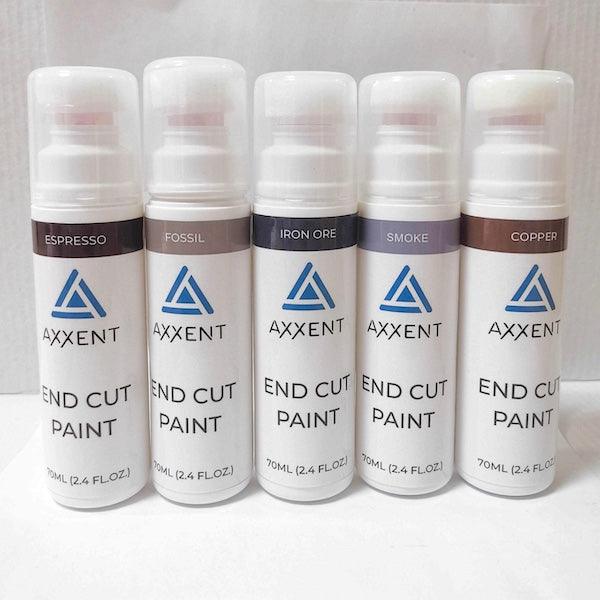
Pintura para corte final AxxentBoard-end finish

Axxent End-Cut Paint

Seals the cut ends of composite boards so the lighter core doesn't show. Eight colour shades — match to your tier colour.

$24.99
TUDS SUDS Deck CleanerCleaner

TUDS SUDS Deck Cleaner

Our house-brand cleaner, formulated for composite + wood decks. Non-caustic, non-butyl, eco-friendly.

$29.99
Official resources

Straight from the manufacturer. Everything technical.

Video

Why composite decking wins on 20-year cost

Cost analysis
Video

Eva-Last Apex PLUS — premium composite walkthrough

Mid-Premium
Video

Composite deck installation walkthrough

Install
FAQ — composite-value, answered

Eight questions Canadian homeowners ask before they decide.

Don't see yours? Call either showroom and one of our Escape Artists will walk you through it.

For roughly 70% of homeowners — yes. Composite is worth the price when you're holding the home 10+ years, the deck faces direct sun, you have pets, kids, or heavy entertaining, and you hate staining. Year-1 cost is about 2x pressure-treated ($60–$120 per sq ft installed vs. $30–$50), but by year 12 the math flips: PT has needed 4–5 stain cycles, surface boards are starting to fail, and composite is still under warranty. By year 20, total cost-of-ownership lands within 20% of each other — and composite still looks new. For 30% of homeowners (short hold, tightest budget, real-wood preference) it's not worth it. Run the math on your project.

Composite is warranted 25–50 years residential. Trex Transcend 25-yr, Eva-Last Apex PLUS 25-yr, Trex Signature 50-yr, Eva-Last Pioneer 25-yr, Deckorators Voyage 50-yr structural. Wood is warranted zero years. Real-world lifespan: pressure-treated typically 10–15 years before surface board replacement on Saskatchewan decks; cedar 15–25 years with annual oiling; composite meets or exceeds its warranty period in our installation history (TUDS has been installing composite since 2016 — first decks are 10 years in and structurally indistinguishable from new).

Per Remodeling Magazine's Cost vs. Value report, composite decks recover roughly 65–75% of capital cost at resale; wood decks recover 60–65%. A 5–10 point gap, plus 'low-maintenance composite' is a buyer-attractive feature line in MLS listings while 'wood deck needs refinishing' often becomes a price-negotiation point. In Saskatchewan listings, brand-name composite (Trex, Eva-Last, Fiberon, Deckorators) on the spec sheet shortens days-on-market [VERIFY against current SK MLS data]. The caveat: under a 5-year hold the resale-ROI gap doesn't recover the full upfront premium.

Honest answer: composite is not the right call for a flip in most cases. The 20-year cost-of-ownership math doesn't matter when the holder period is under 5 years. Resale-ROI gap (65–75% composite vs. 60–65% wood) only recovers 25–35% of the upfront premium. Pressure-treated with a quality finish (Cutek Extreme on cedar, or PT with a clear sealer) gets the deck to look-good-on-listing-day at the lowest possible capital outlay, which is the actual goal of a flip. Exception: a high-end flip in a market where 'composite deck' is a buyer-checkbox can pencil out — but most don't.

Probably yes. Premium composite (Trex Signature 50-yr, Deckorators Voyage 50-yr structural, Eva-Last Pioneer 25-yr capped polymer) is engineered for 50+ year lifespans in normal residential conditions. The cap technology blocks UV, the core resists rot and insects, and the fasteners (hidden clip systems like Camo Edge) don't corrode. What kills composite early: improper joist spacing (over 16" o.c. for most products), grade contact (board sitting on dirt), or ember damage from a fire. None of those are normal failure modes — they're install errors. Composite installed correctly in 2026 will likely outlive its first owner. That's the marketing claim, and from TUDS's 10-year installed history, it's also the data.

Yes, the warranties are real, and we've helped customers navigate claims successfully. Trex 25-year residential limited warranty: covers structural defects + fade and stain to 5-Delta-E or less. Eva-Last 25-year: structural + fade-and-stain on Apex PLUS and Pioneer tiers. Fiberon 25 to 50-year depending on tier. Deckorators Voyage 50-year structural + 25-year fade/stain. How claims work: customer files with the vendor, vendor inspects (sometimes via photos, sometimes onsite), vendor ships replacement boards. TUDS doesn't file claims on your behalf — that's a vendor-direct relationship — but we help you navigate the paperwork and the contact path. What's NOT covered: install errors, ember damage, abuse. Real-world: TUDS has helped customers complete warranty claims; the manufacturers do honour their warranties when the install was correct.

Yes. All major composite warranties (Trex, Eva-Last, Fiberon, Deckorators) are valid across Canada and explicitly cover freeze-thaw conditions. The Saskatchewan stress test: -40°C winters, +35°C summers, 60°C swings. Composite is engineered for thermal expansion (we install with appropriate gap spacing per vendor spec — typically 1/8" to 1/4" end-to-end at standard temp). Hidden-clip fastener systems (Camo Edge, Eva-Last Quickfit) accommodate movement. What we've seen in 10 years of Prairie installs: zero warranty failures attributable to climate. The handful of issues we've helped customers navigate were install-related (joist spacing, gap mistakes) and not climate-driven. Saskatchewan-specific install caveat: footings must extend below 1.2 metre / 4 ft frost depth, which is a framing-side requirement, not a composite warranty issue.

Entry-tier composite from a major brand is the floor. Fiberon GoodLife ($60–$75 installed) and Eva-Last Infinity IS ($60–$80 installed) are the two entry-tier products TUDS stocks that we'd actually stand behind. Both ship 25-year residential warranties — the same warranty length as their premium siblings, just with simpler colour palettes and less-aggressive cap technology. What entry-tier sacrifices: fewer colours, slightly less photorealistic surface, sometimes a basic uncapped or partially-capped construction (depends on tier). What it keeps: the 25-year warranty, the maintenance-free lifestyle, the resale-ROI bump. Avoid: bargain-bin uncapped composite from secondary brands without a Saskatchewan dealer network — warranty claims become hard. Best value tier: mid-premium composite (Trex Transcend, Eva-Last Apex PLUS, Deckorators Voyage) at $85–$120 installed — that's where Shane and Wade send most TUDS customers.

From TUDS

Composite-value content. Honest, weekly.

We get this question more than any other. Here's where the fresh material lives.

Latest from TUDS · YouTube

Watch the latest from TUDS

Unboxings, install walkthroughs, brand comparisons. New video most weeks — the player above always shows our latest.

Subscribe on YouTube →
The TUDS Podcast

The Deckheads

Honest talk about real projects, real mistakes, and Prairie deck-building. Long-form, for homeowners and pros alike.

Follow along — daily builds, honest takes.
Why TUDS

The deck shop Saskatchewan homeowners cross-shop with.

Real Google reviews from real Saskatoon and Regina customers — composite, wood, and finish all on the table from day one.

2016
Canadian-owned since
2
Stores — Regina & Saskatoon
90+
Authorized brands
10,000+
Customers helped
4.9
TUDS Google rating
★★★★★
GGoogle

“We recently gave our 20 year old wood deck a makeover with the help of The Ultimate Deck Shop. Justin at the Regina location was incredibly helpful with each of my visits, answering my questions and explaining/showing me things clearly. To refinish the top of the deck, we used Cutek Wood Reviver followed by Cutek Ex...”

Nicole N.
Regina · Jul 2025
★★★★★
GGoogle

“We had a great experience with The Ultimate Deck Shop. The fence we purchased is great quality. The service was amazing. The price was the best around. We would highly recommend to anyone and will definitely refer family and friends.”

Denise A.
Regina · Nov 2025
★★★★★
GGoogle

“Amazing service (Sam was super helpful and patient). Beautiful options, all staff were friendly. Highly recommend.”

Nikki H.
Regina · Jul 2025
Stand on the boards in person

Saskatoon, Regina, and across the prairies.

Two full yards. Composite, PVC, cedar, and PT all displayed together. Decide with your feet.

Store

Regina

141 4th Avenue East, Regina SK

Walk in and stand on every tier — capped composite, capped PVC, cedar, PT — side-by-side. Decide with your feet.

Mon–Fri 7am–5pm · Sat 9am–3pm

Store

Saskatoon

320 68th Street East, Saskatoon SK

Every composite brand TUDS stocks on display. Run the 20-year math at the counter with one of our Escape Artists.

Mon–Fri 7am–5pm · Sat 9am–3pm

Service area · Composite-decking consultation
SaskatoonReginaMoose JawPrince AlbertYorktonLumsdenWarmanMartensvilleSwift CurrentNorth BattlefordWeyburnEstevanHumboldtMelvilleRosthernTisdaleCalgaryEdmontonWinnipeg+ Most of SK, AB, MB
We help homeowners across Saskatchewan, Alberta, and Manitoba decide between composite and wood. Call either yard for a quote on your project.
Run YOUR math

You've read the scenarios. Now run your number.

Plug your dimensions and material preference into our instant estimator — it'll show you the 20-year cost of ownership for composite vs. wood on your specific project. Or come walk the boards in Saskatoon or Regina and one of our Escape Artists will price every tier on the spot. No pressure, no obligation, no spam.